
Home > Get Ready Challenge > Stage Two > Fire Danger Ratings & Alert Levels

Fire Danger Ratings and Bushfire Alert Levels are how the fire services let you know the danger level both before and during a fire. Learn what they all mean here.
- Check the Fire Danger Rating every day during fire season
- Know what each rating means for your plan
- Follow Bushfire Alert Levels closely during nearby fires as they can change fast
- Get updates from multiple sources, not just the internet
Fire Danger Ratings
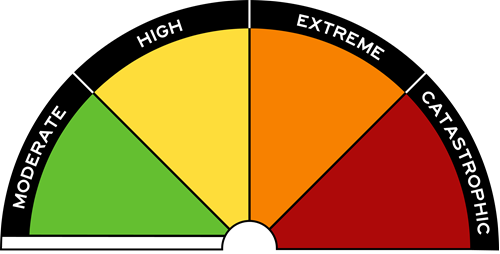
The Fire Danger Rating for your area is declared each day, whether fires are burning or not. The higher the rating, the more dangerous, erratic and difficult to control a fire is likely to be.
You can check the daily Fire Danger Rating at www.rfs.nsw.gov.au/fdr. It may also be displayed in public spaces, such as outside your local RFS fire station.
Fire Danger Ratings were updated in September 2022. Take the time to familiarise yourself with the ratings and what they mean:
- MODERATE – Plan and prepare. Review your bushfire survival plan.
- HIGH – Be ready to act. If a fire is approaching you should only stay if your home is well prepared and you’re ready to defend.
- EXTREME – Take action now. If a fire breaks out stay only if your home is built and prepared to the very highest level.
- CATASTROPHIC – For your safety, leave bushfire risk areas early. No homes are built to withstand these conditions.
Typically the higher the rating is, the higher the temperature, higher the wind speed and lower the humidity. If you hang out wet sheets and towels and they are dry within an hour, chances are the fire conditions are High or above.
Bushfire Alert Levels
Alert Levels are declared when a fire has broken out. They are designed to help you know how to respond to a fire.
Alert levels can change at any time so keep an eye or ear on all these sources. Here is what they look like and what they mean:
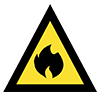
ADVICE – A fire has started. There is no immediate danger. Stay up to date in case the situation changes.
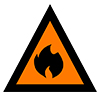
WATCH AND ACT – There is a heightened level of threat. Conditions are changing and you need to start taking action now to protect you and your family.
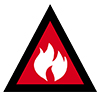
EMERGENCY WARNING – An Emergency Warning is the highest level of Bush Fire Alert. You may be in danger and need to take action immediately. Any delay now puts your life at risk.
If there is a fire in your area, here is how to use this information:
Active fires will appear on the Hazards Near Me app (free download from your device’s App Store), the RFS Fires Near Me page, and may be announced via radio, TV, or social media.
1. Check the Fire Danger Rating and take appropriate action:
- MODERATE: Now is the time to review your plan and make preparations. Run through your Ignition Mission checklist, reduce hazards around your house, check your emergency kit and pack your grab bag.
- HIGH: It’s time to start putting your plan into action. Only consider staying to defend if your home is well prepared and you are ready to actively defend it.
- EXTREME: Only stay if your home is specially built and maintained to the highest standard.
- CATASTROPHIC: No homes are built to withstand these conditions. Leaving early is your only safe option.
2. Monitor Bush Fire Alert Levels
- ADVICE – The fire is being monitored but not currently threatening properties. Check your Triggers to Leave and activate your plan.
- WATCH AND ACT – Risk has increased. If the fire is likely to impact your area now is time to follow your stay-or-go plan.
- EMERGENCY WARNING – Take immediate action: evacuate if safe, or shelter if instructed.
Tip: Bush fires often cause power blackouts. The internet may go offline. Keep a battery or hand-crank AM/FM radio that doesn’t rely on mains power – it could be your best friend.
Emergency Alerts by SMS
You don’t need to register to receive these alerts. Messages may be sent based on your location or the billing address related to your phone service. Landlines can also receive a recorded voice alert.
If you receive one of these heed the advice in the message and consider what it means for your Bushfire Plan. It might be time to leave, or it may be too late to leave safely.
Don’t Wait for a Warning
Telecommunications often fail during major fires. Power can go out, networks clog up, and online services may crash. Always have a backup plan.
Use multiple sources for updates: the RFS website, Hazards Near Me app, ABC Local Radio, social media, and local news.
And don’t forget to keep looking outside and stay aware of the conditions.
What you can do now
The more you plan, the less panic you’ll face in an emergency.
- Identify safe places in your area and multiple routes to get there.
- If leaving isn’t possible, know where you could shelter at home, work or school.
- Even if you plan to leave, do as much as you can to prepare your property. See the Yard Blitz Activity for simple steps.
- A significant quote from the 2019-20 season was, “It’s not safe to do nothing. You must leave or actively defend.” Waiting and seeing will only result in you having less time to take action.
Need some extra help?
If you’re unsure what the Fire Danger Ratings mean for your home, send us a message. We’re happy to talk you through your plan.
TICK OFF STAGE 2!
If you’ve completed all the tasks up to now your Bushfire Survival Plan should be pretty much ready to go. Amazing work!
Next comes one of the most popular bits in the Challenge – prepping your emergency kit. If you’re doing the inbox Challenge, we’ll cover this in next week’s email.