Home > Get Ready Challenge > Stage Three > Build Your Emergency Kit
HEY! We will be at Leura Fair this weekend 10-11 October. Bring your burning questions!

Fire. Flood. Zombie Apocalypse. As a well-prepared Challenger, you’ll be ready to face any crisis with your trusty Emergency Kit.
Emergencies come in all shapes and sizes, from the common blackout to a multi-day evacuation. Having a well prepared and maintained emergency kit will give you a huge advantage when the unexpected happens.
Depending on what you already have lying around this task should only take half an hour – a small price to pay for peace of mind.
But what is an emergency kit?
Basically, a stash of things you’ll wish you had when things go south. In an emergency, it’s better to be looking AT the thing you need than looking FOR it, pulling out drawers and swearing it was in there last time you saw it.
Well, wish no more! We’re about to give you a list of all the essentials you’ll need – nicely organised in one place – to see you through any situation.
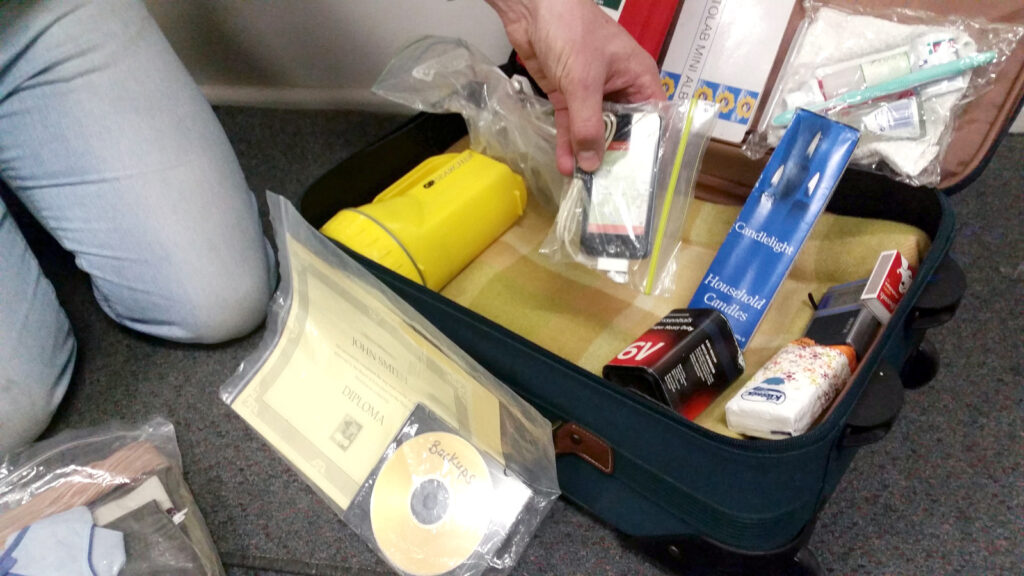
Step 1: Acquire Emergency Box
It could be a tough plastic tub, a small suitcase – basically any container that’s
- waterproof
- light enough to carry
- strong enough to not collapse when loaded.
Step 2: Fill Emergency Box
Your kit should cover both evacuation and stay-at-home situations, like losing power or water.
The Basics
- Battery-operated radio
- Battery-operated torch and/or lantern
- Spare batteries (check you’ve got the right sizes for each item)
- First Aid Kit (with manual)
- Woollen blankets – not just for warm naps, and they’re also great protection from fire
- Important documents (passports, ID, insurance, saved in waterproof bags) Dunc – we cover this in Grab Bag, I think it’s better there.
- USB battery bank for charging phones or tablets
Handy Backups
- Combination pocket knife/bottle/can opener
- Candles and waterproof matches/lighter
- Written/printed list of important contact numbers (don’t just rely on your phone)
- A hard drive with backups of important files, photos and documents
Special Extras
Think about your household’s unique needs. These may include
- A basic portable tool kit for urgent repairscould be a tough plastic tub, a small suitcase – basically any container that’s
- Babies nappies, formula and wipes
- Kids’ comforts such as toys or books
- Something to boil water – a small camping stove can be a lifesaver if you’re a coffee addict.
Step 3: Shop to fill the gaps
Make a quick list of anything you’re missing and grab it next time you’re at the shops.
Step 4: Storing and maintaining your kit
Look after your Emergency Kit, and it will look after you.
- keep it somewhere easy to get to, and make sure the whole household knows where it is
- replace anything you use as soon as you can
- give the kit a birthday and mark it on the calendar. Check and refresh it every year – swap out expired food, update documents, replace batteries etc.
Emergency Communications Checklist
☐ Make a hard-copy contact list
Ring-ring… ring-ring… in an emergency, where your phone could run out of power, a written contact list is priceless. Make sure your list includes:
- Who you’ll call when you leave home
- Any numbers you might need to ring for help or reliable information (local fire authority, SES, local council, etc.)
Download our template contact list [ADD LINK, I DON’T HAVE THIS], open it in your choice of word processing software , and make it yours.
☐ Set up your Call Tree
For swift and efficient emergency communications set up a “call tree” with family or friends. One person calls three specific people, each of them calls three more, and so on, and so on. This way you can quickly get your message out to everyone that matters without overloading the phone network – or your own brain.
☐ Internet
If your home is connected to the NBN, the connection box will stop working in a power outage. Find out how NBN battery backup works and what your options are during a power outage here.
Make sure you have plenty of mobile data and power bank capacity to stay connected with emergency info apps etc.
Job done!
You’ve ticked off one of the most significant things you can do to make your life easier in a bushfire.
We’ve had amazing feedback from families who’ve done this. Share the idea with a mate. And while you’re in packing mode, proceed directly to the next task and pack your personal Grab Bag.