
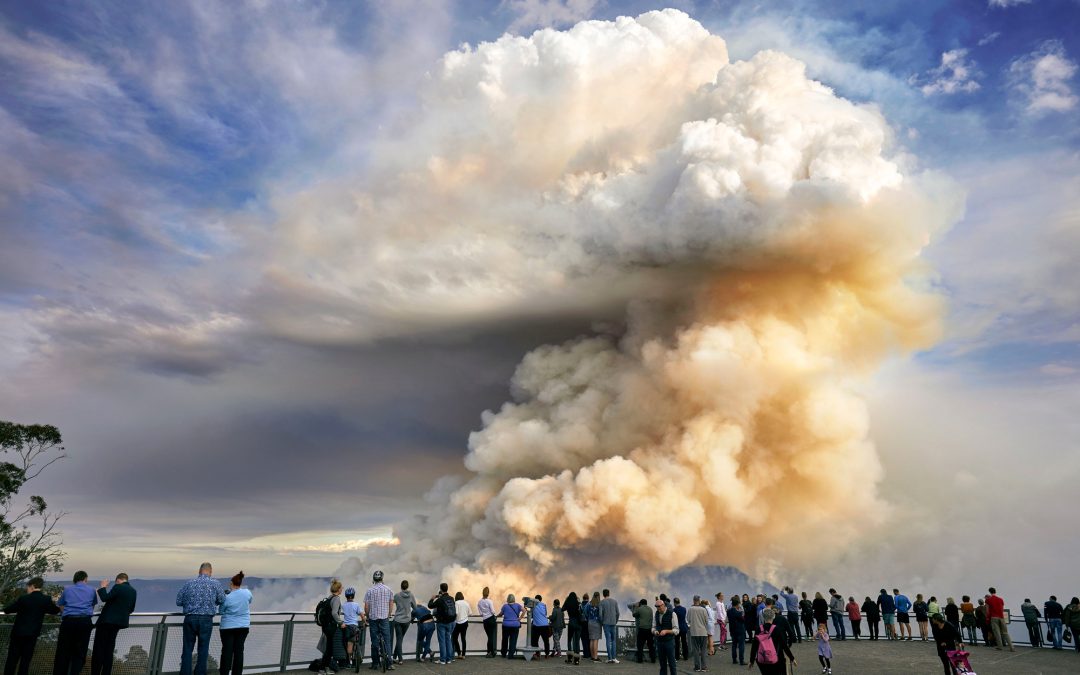
Living in the Blue Mountains is brilliant – until bushfire season rolls around and you start wondering if you’ve done enough to prepare. Here are the questions we hear most often..
1. Is this going to be a bad fire season in the Blue Mountains?
We wish we could tell you.
Weather forecasters can give us seasonal outlooks – warmer or cooler, wetter or drier – but they can’t predict the conditions on any given day. A wet spring might give you false confidence, then three days of hot, dry winds in January changes everything.
What we do know is the fuel situation. The 2019-20 fires left a wide green corridor of unburnt ground right along the Great Western Highway. Add five years of wet weather and vigorous regrowth and the fuel load around our villages is significant.
The weather will have the final say. So rather than asking “will this be a bad season?”, focus on a question you can control: are we ready regardless of what the season brings?”
2. “Are we really at risk? We’re in the middle of town, not out in the bush.”
The short answer is, no property in the Blue Mountains is entirely safe.
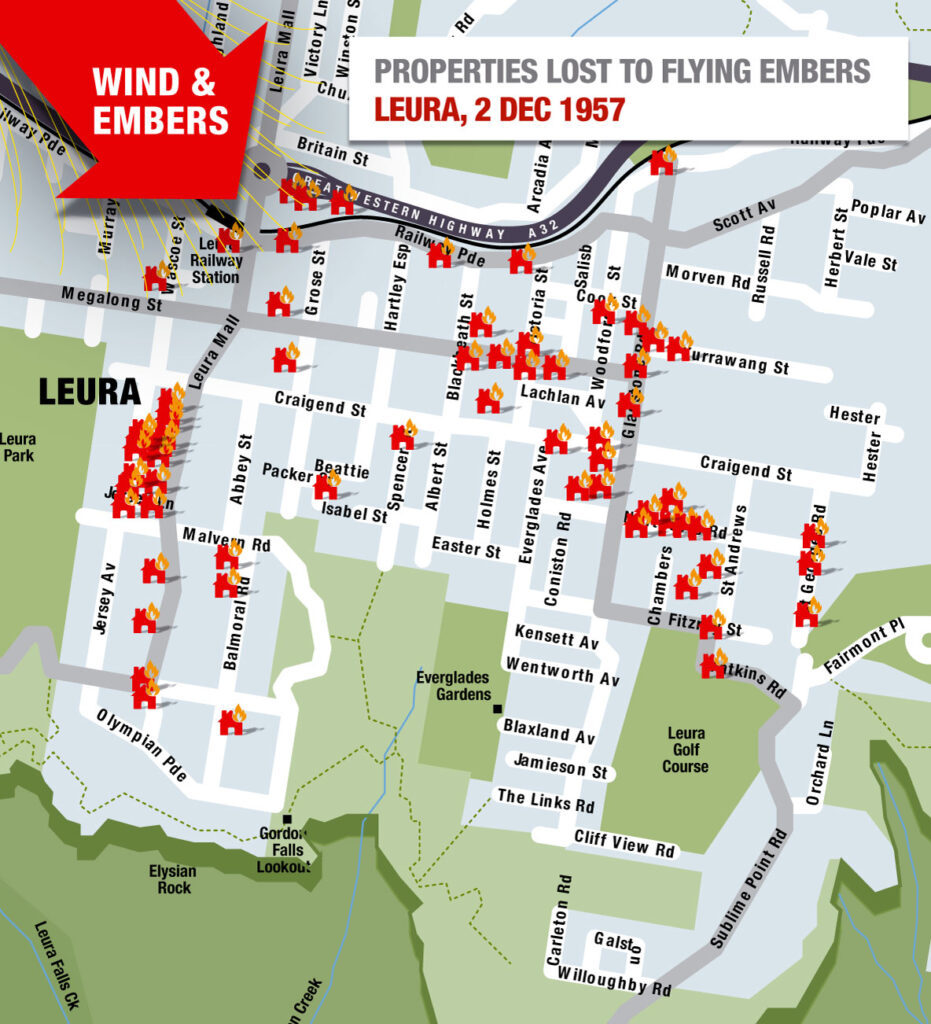
In a bush fire embers can travel kilometres ahead of the fire front, carried by wind and heat. When they rain down on a suburb, they land on dry leaf litter and can start new fires – doesn’t matter whether that’s deep in the bush, surrounded by houses, or in your gutters
In December 1957, the village of Leura lost 60 properties to ember attack alone. This map from that day shows embers hit every part of town – location didn’t matter, only how well prepared each property was.
3. “What’s the most important thing we can do to prepare?”
If you made us pick one thing it would definitely be make a solid evacuation plan.
Knowing in advance what you’ll do in an emergency is the single biggest boost you can give to your chance of making it through safely. It’s the very first topic you’ll cover when you sign up for the Get Ready Challenge.
After that? Spend some time clearing your gutters (and keep them clear throughout fire season), and create defendable space around your house. These three things form the foundation of good preparation.
5. “Should we stay and defend or leave early?”
It depends on your house, your preparation level, and your physical and mental capability.
Leave early if:
- Your house isn’t well prepared
- You have young children or vulnerable people in your care
- You’re not physically capable of extended hard work in extreme conditions
- You’ve never experienced a bushfire before
- The Fire Danger Rating is Catastrophic
Only consider staying if:
- Your house is prepared to the highest standards
- You’re physically and mentally capable
- You have a solid plan and have practiced it
- You understand it’s going to be scary, hot, smoky, and exhausting
- You’ve told family and friends your plan
There’s no shame in leaving early, in fact it’s the safest option for most households. The time to make this decision is now, not when you can see flames.
If you’re thinking about staying and defending, take a look at the videos on this page for a preview of the conditions you might have to face.
5. “What if we can’t afford to do all the recommended preparations?”
You can make a huge difference with stuff you already have and a small investment of time and effort. For starters:
- Clearing gutters just needs a ladder, a tough bag or tub and some gloves
- Moving flammable items away from the house is free
- Mowing the lawn and tidying gardens costs nothing but fuel (and maybe some sweat)
- Making an evacuation plan is completely free.
For things that do cost money, prioritize:
- Gutter guards (they pay for themselves in reduced maintenance)
- Basic hand tools for clearing vegetation
- Emergency kit supplies bought gradually over several shops
The Rural Fire Service AIDER program offers free help for people with mobility difficulties, and local community organisations can help with subsidised garden services.
Don’t be shy about asking for help and don’t worry if you can’t get to every task. A partially prepared house is way better than an unprepared one.
We cover this in heaps more detail in this Get Ready Challenge article.
6. “Our property backs onto bushland. Does that make us more at risk?”
Yes and no. You’re more at risk from radiant heat and direct flame contact if fire approaches from that direction. But remember, ember attack is the biggest threat, and embers can attack anywhere, hours before the fire front arrives
What matters more than your location is your preparation level:
- Create defendable cleared space between the bush and your house
- Keep that zone maintained year-round
- Remove dead vegetation and leaf litter regularly
- Consider your escape routes if fire comes from that direction
Properties backing onto bush aren’t doomed – you just need to give more attention to the bushland interface.
You can grab some useful yard prep tips and garden hacks to reduce your bushfire risk here.
7. “We’re renting. Do we need to do anything?”
As a renter you face some unique challenges, but you can still prepare:
Things you can do without permission:
- Clear gutters
- Maintain gardens – jobs like mowing, weeding, tidying may be required by your lease
- Create an evacuation plan
- Make your emergency kit
- Move flammable items away from the house
Things you should discuss with your landlord:
- Installing gutter guards
- Removing hazardous vegetation
- Trimming overhanging branches
- Securing or removing flammable materials
Most landlords appreciate tenants who care about property safety. Frame it as protecting their investment. If they’re reluctant, you can report bushfire hazards to the RFS.
Remember: your safety matters as much as anyone else’s. Don’t let renting stop you from doing what you can.
Check out this handy guide for tenants and landlords in the Get Ready Challenge,
8. “How do we know when to actually leave?”
The biggest danger to life during a bushfire is being trapped in a car. A moment of panic can quickly turn into a deadly situation. That’s why waiting until you see flames is way too late.
Create three “triggers to leave” – specific, objective conditions that tell you it’s time to go:
Example triggers might be:
- Fire danger rating is Extreme or higher and you have dependents to care for
- a fire is within 5km and moving towards you
- Emergency Warning issued for nearby suburbs
- Main road showing heavy traffic (everyone else is leaving)
- Family members report feeling unsafe.
Write these down. Share them with your household. When any trigger is met, you leave immediately – no waiting to “see what happens” or “just finish this one thing.”
The key word is early. For more on triggers to leave check out this Get Ready Challenge task.
9. “What’s all this about Fire Danger Ratings? What do they mean for us?”
The Fire Danger Rating tells you how dangerous fire conditions are on any given day. They changed in September 2022, so make sure you’re familiar with the new system:
- MODERATE – Plan and prepare. Review your bushfire survival plan.
- HIGH – Be ready to act. If a fire is approaching you should only stay if your home is well prepared and you’re ready to defend.
- EXTREME – Take action now. If a fire breaks out stay only if your home is built and prepared to the very highest level.
- CATASTROPHIC – For your safety, leave bushfire risk areas early. No homes are built to withstand these conditions.
Check the rating daily during bushfire season at www.rfs.nsw.gov.au/fdr
We cover fire danger ratings and bushfire alert levels in this Bushfire Basics article.
10. “How can we get more information and support?”
Glad you asked! Here are your best resources:
For current fire information:
- Hazards Near Me app (Apple or Android)
- NSW RFS website: www.rfs.nsw.gov.au
- ABC Local Radio
- Live Traffic NSW (for road closures)
For preparation help:
- nothing beats completing the Get Ready Challenge
- NSW RFS Bush Fire Survival Plan
- Local brigade open days and community events
- RFS AIDER program for practical assistance with manual jobs
Emergency contacts:
- Triple Zero (000) for immediate danger
- RFS Fire Information Line: 1800 679 737
Don’t forget your neighbours too. The most resilient communities are the ones where people look out for each other and share information.
The bottom line
Bushfire preparation isn’t about having the perfect sprinkler system or spending thousands on house upgrades. It’s about understanding your risk, taking practical steps to reduce it, and having a clear plan so you can make good decisions in an emergency.
Start with a couple of tasks this weekend, build on them next weekend, and keep going. Every action you take improves your household’s chances.
The peace of mind that comes from being prepared is worth every minute you spend on it.
Ready to get serious about bushfire preparation? Sign up for the Get Ready Challenge. We’ve broken everything down into manageable weekly tasks. Join the hundreds of Blue Mountains households who’ve already transformed their fire readiness.
Hi, this is a comment.
To get started with moderating, editing, and deleting comments, please visit the Comments screen in the dashboard.
Commenter avatars come from Gravatar.